
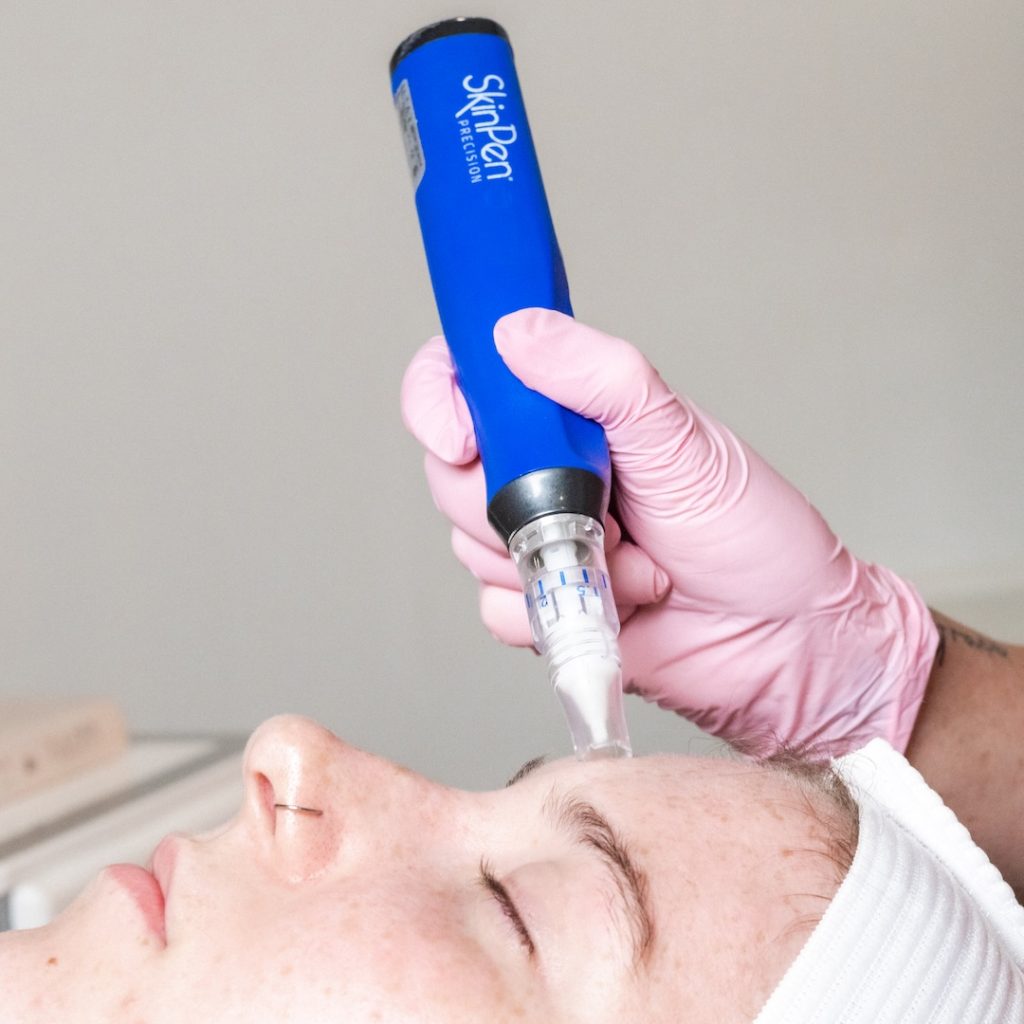
Microneedling for Hyperpigmentation: Does It Really Work?
If uneven skin tone, dark spots, or lingering post-breakout marks have been frustrating you, you’ve probably come across microneedling as a potential solution — and you may be wondering whether the results are real or just hype. The short answer: yes, SkinPen microneedling can make a genuine difference for hyperpigmentation, and the science behind why it works is well-established. Here’s what you need to know about using SkinPen microneedling for hyperpigmentation at Soul Aesthetics in Tulsa.
What Causes Hyperpigmentation?
Hyperpigmentation is an umbrella term for any area of skin that appears darker than the surrounding tissue. It happens when melanocytes — the cells responsible for producing skin pigment — become overactive and deposit excess melanin in certain areas. Common causes include:
- Post-inflammatory hyperpigmentation (PIH): Dark marks left behind after acne, injuries, or skin inflammation
- Sun damage and age spots: UV exposure triggers excess melanin production, leading to freckles, sun spots, and uneven tone over time
- Melasma: Hormonally driven pigmentation that typically appears as larger patches, most commonly on the cheeks, forehead, and upper lip
- Uneven skin tone: General dullness and patchiness caused by accumulated sun damage, environmental stress, and slowed cell turnover
According to the American Academy of Dermatology, hyperpigmentation is one of the most common skin concerns across all skin types and tones — and it can be stubborn to treat with topical products alone, especially when pigment has settled in the deeper layers of the skin.
How Does SkinPen Microneedling Help with Hyperpigmentation?
SkinPen microneedling addresses hyperpigmentation through several mechanisms working together:
Accelerated Cell Turnover
The controlled micro-injuries created by the SkinPen trigger a wound-healing response that accelerates the skin’s natural cell turnover process. As old, pigmented skin cells are shed and replaced with fresh new cells, areas of discoloration gradually fade. This is the same principle behind chemical peels and retinoids — just achieved through a different mechanism.
Breaking Up Pigment Deposits
The microneedling process disrupts existing pigment clusters beneath the skin’s surface, helping to break them up and allow the body to reabsorb them more effectively. For post-inflammatory hyperpigmentation — the dark marks left behind after acne or inflammation — this can be particularly effective.
Enhanced Absorption of Brightening Serums
One of the most powerful aspects of SkinPen microneedling for hyperpigmentation is the dramatically enhanced absorption window it creates. The microchannels formed during treatment allow topical brightening serums — including vitamin C, tranexamic acid, and growth factors — to penetrate far more deeply than they could through intact skin. At Soul, we apply carefully chosen serums during and immediately after treatment to take direct advantage of this window, amplifying results with every session.
Collagen Stimulation for Overall Skin Quality
As new collagen builds over the weeks following treatment, the overall quality, texture, and luminosity of the skin improves — creating a more even, healthy-looking complexion that makes remaining areas of pigmentation less visible even before they’ve fully faded.
What Type of Hyperpigmentation Responds Best to SkinPen?
SkinPen microneedling is particularly well-suited for:
- Post-inflammatory hyperpigmentation (dark marks after acne or breakouts)
- Sun damage and age spots
- General uneven skin tone and dullness
- Mild to moderate melasma (though melasma can be complex — see below)
A note on melasma: it’s one of the more nuanced pigmentation concerns to treat because it’s driven by hormonal factors and can be triggered or worsened by heat. SkinPen microneedling can be effective for melasma when done carefully and paired with the right supportive skincare, but it requires a thoughtful approach. Your provider at Soul will evaluate your pigmentation pattern during your consultation and let you know whether SkinPen alone or a combination approach is the better fit.
SkinPen Microneedling vs. Laser for Hyperpigmentation
Patients often ask how SkinPen microneedling compares to laser treatments for hyperpigmentation. Both can be highly effective — but they work differently and have different ideal use cases.
- SkinPen microneedling is safe across all skin tones and doesn’t carry the risk of post-inflammatory hyperpigmentation (PIH) that some laser treatments can in deeper skin tones. It’s a gentler approach with minimal downtime, and it addresses texture, scars, and tone simultaneously.
- Ultra LaseMD laser (which we offer at Soul) targets pigment more directly using light energy, making it particularly effective for discrete sun spots and surface-level discoloration. It can deliver faster results for some types of pigmentation.
For many patients, the most effective approach is combining both. At Soul, our EvenSkin Soulution pairs SkinPen microneedling with the Ultra LaseMD laser in a single treatment plan — addressing tone and texture comprehensively from multiple angles. Research published in the National Library of Medicine supports the use of microneedling for pigmentation concerns, noting its efficacy for post-inflammatory hyperpigmentation and its favorable safety profile across skin types.
What to Expect from SkinPen Microneedling for Hyperpigmentation at Soul
Your journey begins with a consultation where your provider will assess your pigmentation — its type, depth, and what’s driving it — before recommending a treatment plan. There’s no one-size-fits-all approach here; the right plan depends on your specific pattern of pigmentation, your skin tone, and your overall skin health.
During treatment, a numbing cream is applied for 20 to 30 minutes before the SkinPen is used to treat the skin in multiple passes. Brightening serums are applied during and after treatment to take advantage of the enhanced absorption window. Most patients experience 24 to 48 hours of mild redness, after which they can return to their normal routine.
Results for hyperpigmentation typically develop gradually over a series of treatments. Most patients begin to notice improvement after the second or third session, with the most significant results visible two to three months into their treatment series as cell turnover accelerates and new collagen builds.
Supporting Your Results with the Right Skincare
In-clinic treatment is only part of the equation for hyperpigmentation. What you use at home between sessions makes a real difference in how quickly and completely pigmentation fades — and in preventing new pigmentation from forming.
At Soul, we carry medical-grade skincare lines formulated to support pigmentation treatment, including SkinMedica’s Even & Correct Brightening Serum, Revision Skincare’s C+ Correcting Complex, and options from Biojuve that support the skin microbiome while addressing tone. Daily SPF is non-negotiable when treating any type of hyperpigmentation — UV exposure directly stimulates melanin production, and skipping sunscreen will undermine your results regardless of what treatment you’re doing. You can explore our full skincare collection at soultulsa.com/skincare.
Frequently Asked Questions About SkinPen Microneedling for Hyperpigmentation
How many SkinPen treatments do I need for hyperpigmentation?
Most patients see meaningful improvement after three to six sessions spaced four to six weeks apart. Deeper or more stubborn pigmentation — particularly melasma — may benefit from additional sessions or a combination approach. Your provider at Soul will give you a realistic picture at your consultation.
Is SkinPen microneedling safe for darker skin tones?
Yes — one of the significant advantages of SkinPen microneedling for hyperpigmentation is its safety across all skin tones. Unlike some laser treatments, microneedling does not use heat or light energy that can trigger post-inflammatory hyperpigmentation in deeper skin tones. It’s one of the most inclusive treatment options available for pigmentation concerns.
Can SkinPen microneedling make hyperpigmentation worse?
When performed correctly by a trained provider, SkinPen microneedling should not worsen hyperpigmentation. In fact, it’s often chosen specifically because of its low risk of PIH compared to more aggressive treatments. Post-treatment sun protection and following your provider’s aftercare instructions are important for ensuring the best outcome.
How soon will I see results for hyperpigmentation?
Some improvement in overall skin tone and radiance may be visible within the first couple of weeks as the skin heals and fresh cells emerge. More significant fading of dark spots and discoloration typically develops over two to three months as the full effects of collagen stimulation and accelerated cell turnover take hold.
Can I combine SkinPen microneedling with other pigmentation treatments?
Yes — and for many patients, combination treatment delivers the fastest and most comprehensive results. At Soul, we often pair SkinPen microneedling with the Ultra LaseMD laser as part of our EvenSkin Soulution, and support both with medical-grade brightening skincare. You can browse our treatments by concern to see the full range of options we offer for hyperpigmentation and uneven tone.
Ready to Fade Dark Spots and Even Your Skin Tone?
If hyperpigmentation has been affecting your confidence, SkinPen microneedling at Soul Aesthetics in Tulsa offers a safe, effective, and genuinely results-driven path forward. Our team will take the time to understand your specific pigmentation concerns and build a plan that’s right for your skin — not a generic protocol.
Book your consultation today at soultulsa.com/book-now/ and take the first step toward clearer, more even, more confident skin.
Author: Kelle C.