
Can Microneedling Help with Pigmentation? Here’s What to Know
If hyperpigmentation has been a persistent concern — whether it’s sun spots, melasma, post-acne marks, or general uneven tone — you’ve probably done a lot of research. Microneedling for pigmentation comes up often, and for good reason. It’s one of the most effective, versatile tools we have at Soul Aesthetics in Tulsa for improving uneven skin tone, and it works in a fundamentally different way than most other pigmentation treatments. Here’s an honest, thorough look at what microneedling can and can’t do for pigmentation — and how we approach it at Soul.
What Causes Hyperpigmentation?
Hyperpigmentation occurs when the skin produces excess melanin — the pigment responsible for skin color — in certain areas, causing those spots to appear darker than the surrounding skin. It’s one of the most common skin concerns we see at Soul, and it can be triggered by a wide range of factors:
- Sun damage — UV exposure is the leading cause of sun spots, age spots, and overall uneven tone
- Post-inflammatory hyperpigmentation (PIH) — dark marks left behind after acne breakouts, injuries, or skin trauma
- Melasma — hormonally driven patches of discoloration, often appearing on the cheeks, forehead, and upper lip
- General photo-aging — cumulative sun damage that creates an overall dull, uneven complexion over time
The type, depth, and cause of your pigmentation all affect which treatment approach will work best — which is why a consultation is always the right first step before committing to any treatment.
How Does Microneedling Help with Pigmentation?
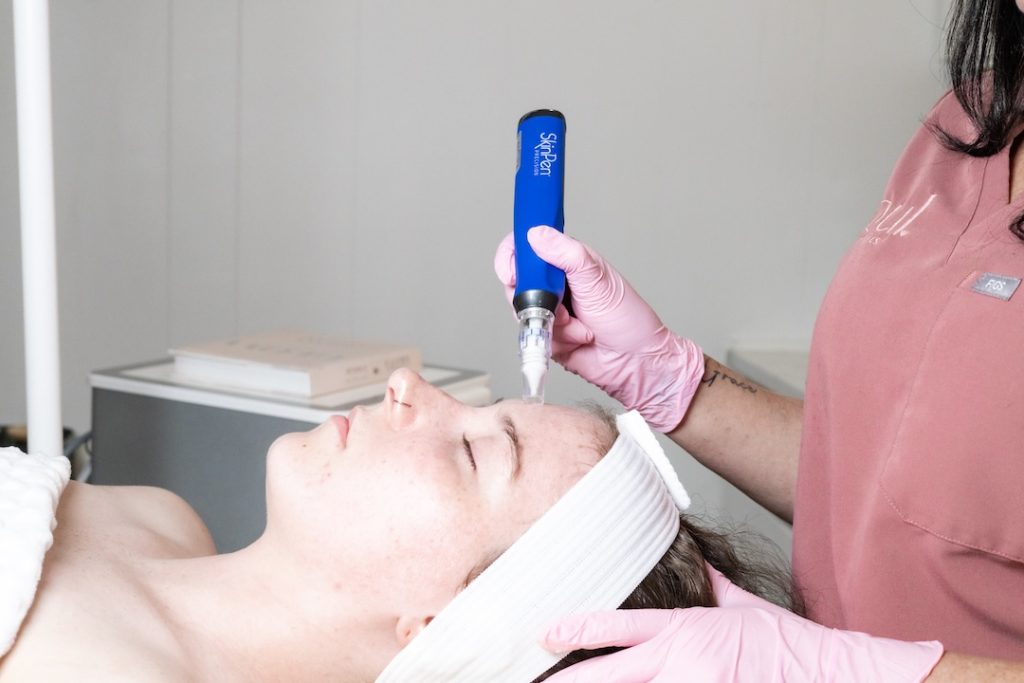
Microneedling — also called collagen induction therapy — uses a device with fine, medical-grade needles to create controlled micro-injuries in the skin. These micro-injuries trigger the body’s natural healing response, stimulating the production of new collagen and elastin and accelerating cell turnover. It’s this accelerated renewal process that makes microneedling for pigmentation so effective.
Here’s specifically what happens with pigmentation:
- Accelerated cell turnover — microneedling speeds up the rate at which old, pigmented skin cells are shed and replaced with fresh new ones, gradually lightening dark spots over time
- Disruption of melanin clusters — the micro-injuries physically break up concentrated areas of melanin, helping to disperse pigmentation more evenly
- Enhanced product absorption — the microchannels created during treatment allow brightening serums and skincare actives to penetrate far more deeply than they can through intact skin, supercharging their effectiveness
- Collagen stimulation — as new collagen builds, the overall quality and evenness of the skin improves alongside the pigmentation improvement
According to the American Academy of Dermatology, microneedling is a well-established treatment for improving skin texture and tone, and its ability to address pigmentation has been supported by a growing body of clinical evidence.
What Types of Pigmentation Does Microneedling Treat Best?
Microneedling is effective for a range of pigmentation concerns, but it works better for some than others:
Post-Inflammatory Hyperpigmentation (PIH)
Microneedling is particularly effective for post-inflammatory hyperpigmentation — the dark marks left behind after acne breakouts. By accelerating cell turnover and stimulating new skin growth, it gradually fades these marks and improves overall skin evenness. This is one of the most rewarding uses of microneedling for pigmentation, and patients often see meaningful improvement over a series of treatments.
Sun Spots and Age Spots
Surface-level sun spots respond well to microneedling, particularly when combined with brightening serums infused during treatment. For more stubborn or deeper sun damage, combining microneedling with laser treatment often delivers faster, more comprehensive results.
Melasma
Melasma is the most complex pigmentation concern to treat — and it requires a careful, nuanced approach. Microneedling can help fade melasma over time, but because melasma is hormonally driven and can be triggered by heat and inflammation, it must be performed carefully by an experienced provider to avoid worsening the condition. At Soul, we always assess melasma thoroughly before recommending a treatment plan and often combine microneedling with medical-grade brightening skincare for the best results.
General Uneven Tone and Dullness
Even without a specific pigmentation diagnosis, many patients notice that their skin tone looks uneven, dull, or lackluster. Microneedling addresses this beautifully by refreshing the skin’s surface and improving overall radiance alongside any targeted pigmentation improvement.
Microneedling for Pigmentation at Soul: Our Devices
At Soul Aesthetics in Tulsa, we offer two professional microneedling options for pigmentation treatment:
SkinPen Microneedling
SkinPen is the first FDA-cleared microneedling device and the gold standard for professional collagen induction therapy. It delivers precise, controlled micro-injuries using sterile, single-use needle cartridges — stimulating collagen and cell turnover while minimizing unnecessary trauma. SkinPen is ideal for post-inflammatory hyperpigmentation, surface sun spots, and general tone improvement, and it’s appropriate for all skin types and tones.
Genius RF Microneedling
The Lutronic Genius combines microneedling with radiofrequency energy for deeper collagen stimulation and more comprehensive skin remodeling. For patients with more stubborn pigmentation concerns alongside texture or laxity issues, Genius RF can deliver enhanced results compared to traditional microneedling alone. At Soul, Genius RF is the centerpiece of our TotalSkin Soulution package — combined with Ultra LaseMD for comprehensive multi-layer skin rejuvenation.
Combining Microneedling with Other Treatments for Better Pigmentation Results
Microneedling is effective on its own — but for more significant or stubborn pigmentation, combining it with complementary treatments often produces faster and more comprehensive results. At Soul, we offer several combination options specifically designed for this:
EvenSkin Soulution — Clarity II + Ultra LaseMD
Our EvenSkin package pairs the Clarity II laser with our Ultra LaseMD fractional laser for a powerful tone-correcting treatment that addresses pigmentation at multiple levels simultaneously. This is one of our most popular combinations for patients whose primary concern is uneven tone and sun damage.
RadiantSkin Soulution — SkinPen + Ultra LaseMD
RadiantSkin combines SkinPen microneedling with Ultra LaseMD laser resurfacing — treating both the deeper collagen-stimulating benefits of microneedling and the surface tone-correcting power of fractional laser in the same appointment. This combination is particularly effective for patients with mixed concerns — pigmentation alongside texture issues or fine lines.
You can explore all of our Skin Soulutions packages to see which combination might be the right fit for your skin.
Supporting Microneedling Results with Medical-Grade Skincare
What you put on your skin between treatments matters just as much as the treatments themselves — especially for pigmentation. At Soul, we carry several medical-grade skincare products specifically formulated to support pigmentation improvement between microneedling sessions:
- SkinMedica Even & Correct Brightening Serum — a comprehensive brightening serum targeting multiple pathways of melanin production
- SkinMedica Even & Correct Dark Spot Cream — targeted treatment for stubborn dark spots
- Revision C+ Correcting Complex 30% — a high-potency vitamin C serum that supports collagen and brightens overall tone
- Colorescience Face Shield Flex SPF 50 and SkinMedica Essential Defense Mineral Shield — daily mineral SPF is non-negotiable when treating pigmentation, as UV exposure will work against any progress made in treatment
Your provider at Soul will recommend the right home care protocol to complement and extend your microneedling results. You can explore our full skincare collection at soultulsa.com/skincare.
What to Expect: Results and Timeline
Microneedling for pigmentation delivers gradual, progressive results rather than overnight transformation. Most patients begin to notice improvement in skin brightness and evenness within two to four weeks of their first treatment. More significant pigmentation fading typically develops over two to three months as cell turnover accelerates and new skin replaces pigmented tissue.
For optimal results with pigmentation concerns, most patients benefit from a series of three to six treatments spaced four to six weeks apart. Stubborn concerns like melasma may require more treatments and ongoing maintenance. Consistent daily SPF use throughout and after treatment is essential — without it, UV exposure will continue to trigger melanin production and undermine your results.
Is Microneedling Safe for All Skin Tones?
Yes — and this is one of microneedling’s most important advantages for pigmentation treatment. Unlike some laser treatments that target pigment directly and carry a higher risk of post-inflammatory hyperpigmentation in medium to deeper skin tones, microneedling works through a mechanical process that is safe for all skin types and tones. According to research published in the National Library of Medicine, microneedling has demonstrated consistent safety and efficacy across diverse skin types, making it one of the most inclusive pigmentation treatment options available.
That said, proper technique and appropriate needle depth are critical — particularly for patients with darker skin tones or a history of melasma, where aggressive treatment can trigger additional pigmentation. At Soul, all microneedling treatments are performed by trained aesthetic professionals who assess your skin carefully before every session.
Frequently Asked Questions About Microneedling for Pigmentation
How many microneedling sessions do I need for pigmentation?
Most patients with hyperpigmentation concerns benefit from three to six treatments spaced four to six weeks apart. Milder concerns may show meaningful improvement in two to three sessions, while stubborn pigmentation like melasma may require more treatments and ongoing maintenance. Your provider at Soul will give you a personalized recommendation during your consultation.
Can microneedling make pigmentation worse?
When performed correctly by a trained provider, microneedling should not worsen pigmentation. However, improper needle depth, aggressive treatment of active melasma, or inadequate sun protection following treatment can cause post-inflammatory hyperpigmentation. This is why choosing an experienced provider and following all aftercare instructions — especially daily SPF — is essential.
How soon will I see results for pigmentation after microneedling?
Most patients notice an improvement in overall skin brightness within two to four weeks. More significant pigmentation fading develops over two to three months as cell turnover accelerates. Results continue to improve with each subsequent treatment in a series.
Is microneedling or laser better for pigmentation?
Both are effective — and often the best approach combines both. Microneedling works through mechanical cell turnover stimulation and is safe for all skin tones. Laser treatments like Ultra LaseMD can target pigmentation more directly and may deliver faster results for surface-level concerns. At Soul, many patients achieve the most comprehensive results with our combination packages like RadiantSkin or EvenSkin that pair both approaches in a single treatment.
What skincare should I use after microneedling for pigmentation?
Your provider at Soul will give you a specific post-treatment protocol, but in general: gentle cleansing, a soothing moisturizer, and daily mineral SPF are the essentials immediately after treatment. Once your skin has healed, brightening serums like SkinMedica Even & Correct or Revision C+ Correcting Complex can be reintroduced to support and extend your results.
Ready to Address Your Pigmentation at Soul Aesthetics in Tulsa?
If hyperpigmentation has been holding your skin back, microneedling — alone or combined with the right treatments — can make a real difference. At Soul Aesthetics in Tulsa, we take a thorough, personalized approach to every skin concern, and we’d love to help you build a plan that gets you the results you’re looking for.
Book your consultation today at soultulsa.com/book-now/ and take the first step toward brighter, more even, more confident skin.
Author: Kelle C.