Fractional Laser Therapy in Tulsa: What It Is and How It Can Transform Your Skin
If you’ve been researching laser skin treatments, you’ve probably come across the term “fractional laser therapy” — and for good reason. It’s one of the most effective, scientifically proven approaches to skin rejuvenation available today, and it’s at the core of two of the most advanced laser treatments we offer at Soul Aesthetics in Tulsa. Here’s a clear, thorough guide to what fractional laser therapy is, how it works, and which options are right for you.
What Is Fractional Laser Therapy?
Fractional laser therapy is a type of laser skin treatment that delivers energy to the skin in thousands of microscopic columns — called microthermal zones — rather than treating the entire surface at once. By targeting only a “fraction” of the skin at a time, the laser creates controlled micro-injuries that trigger the body’s natural healing response, stimulating the production of new collagen and elastin while leaving the surrounding tissue intact to accelerate healing.
This approach is what separates fractional lasers from older, traditional laser resurfacing techniques. Traditional ablative lasers treated the entire skin surface — which delivered results but also meant weeks of downtime and significant recovery. Fractional laser therapy delivers comparable or superior results with dramatically less downtime, making it accessible to a much wider range of patients.
According to the American Academy of Dermatology, fractional laser treatments are among the most effective options for improving skin texture, tone, and the appearance of scars and fine lines — with a favorable safety profile when performed by a trained provider.
Ablative vs. Non-Ablative Fractional Laser Therapy
There are two types of fractional laser therapy — ablative and non-ablative — and understanding the difference is key to choosing the right treatment for your goals.
Non-Ablative Fractional Laser Therapy
Non-ablative fractional lasers deliver heat energy into the deeper layers of the skin without removing the surface layer. This stimulates collagen production and improves tone and texture from within, while leaving the skin’s outer surface intact. The result is minimal downtime — most patients experience redness for a day or two — with gradual improvement that develops over several weeks as collagen builds.
Non-ablative fractional laser therapy is ideal for patients who want consistent, natural-looking improvement without significant recovery time, or who need to maintain their regular schedule around treatments.
Ablative Fractional Laser Therapy
Ablative fractional lasers remove microscopic columns of skin tissue while also delivering heat into the deeper layers. This creates more aggressive collagen stimulation and surface renewal — delivering more dramatic results but also requiring more downtime as the skin heals. Redness, swelling, and flaking are expected for several days to one to two weeks depending on the intensity of the treatment.
Ablative fractional laser therapy is ideal for patients with more significant concerns — deeper wrinkles, acne scars, significant sun damage, or loose skin — who want the most comprehensive results possible from a single or limited series of treatments.
At Soul Aesthetics in Tulsa, we offer both types — giving us the ability to match the treatment to the patient rather than the other way around.
Fractional Laser Therapy at Soul: Our Two Devices
Ultra LaseMD — Non-Ablative Fractional Laser
The Ultra LaseMD is our non-ablative fractional laser — a thulium wavelength device that targets water within skin cells to create controlled micro-injuries and stimulate collagen production. What makes Ultra LaseMD particularly unique is that it’s completely “color blind” — it targets water rather than pigment, making it safe and effective on all skin tones including medium and deeper complexions where other lasers may carry a higher risk of hyperpigmentation.
Ultra LaseMD is highly customizable, with treatment levels ranging from our gentle UltraGlo (virtually no downtime, immediate radiance) to the full Ultra LaseMD treatment for more comprehensive resurfacing. It’s commonly used to treat sun damage, uneven tone, fine lines, melasma, rough texture, and dull skin.
eCO2 Plus — Ablative Fractional CO2 Laser
The Lutronic eCO2 Plus is our ablative fractional CO2 laser — one of the most powerful skin resurfacing tools available in non-surgical aesthetics. CO2 laser energy simultaneously resurfaces the skin’s surface and stimulates deep collagen remodeling, delivering results that can be truly transformative for patients with more advanced aging concerns, deeper acne scars, or significant sun damage.
At Soul, we offer three levels of eCO2 treatment — Light, Medium, and Deep — allowing us to customize the intensity based on your concerns, skin type, and how much downtime you’re comfortable with. Light CO2 offers a meaningful improvement with a few days of recovery, while Deep CO2 delivers more dramatic results with a longer healing period.
You can explore all of our laser treatment options at Soul to learn more about both devices and how they compare.
What Can Fractional Laser Therapy Treat?
Fractional laser therapy is one of the most versatile skin treatments available because it addresses so many concerns simultaneously. At Soul Aesthetics in Tulsa, fractional laser treatments are commonly used to improve:
- Fine lines and wrinkles — by stimulating new collagen production in the treated areas
- Sun damage and photo-aging — reducing sunspots, uneven pigmentation, and overall dullness
- Acne scars — breaking down irregular scar tissue and stimulating organized collagen growth
- Uneven skin tone and texture — for a smoother, more refined, radiant complexion
- Melasma and hyperpigmentation — with safe, effective improvement particularly with non-ablative options
- Skin laxity and crepey texture — tightening and firming the skin over time
- Enlarged pores — improving skin quality and surface refinement
- Stretch marks — stimulating collagen in affected tissue
Research published in the National Library of Medicine confirms that fractional laser treatments consistently demonstrate improvement in skin texture, tone, collagen density, and scar appearance — with a favorable safety profile across skin types when performed by trained providers.
What to Expect During Fractional Laser Therapy
Consultation
Every fractional laser treatment at Soul begins with a thorough consultation. Your provider will assess your skin, discuss your specific concerns and goals, and recommend the right device and treatment level — whether that’s a gentle UltraGlo, a full Ultra LaseMD session, or a customized eCO2 treatment.
Preparation
Your skin will be cleansed before treatment. Depending on the device and intensity, a topical numbing cream may be applied to keep you comfortable. For deeper eCO2 treatments, your provider will discuss preparation in more detail during your consultation.
Treatment
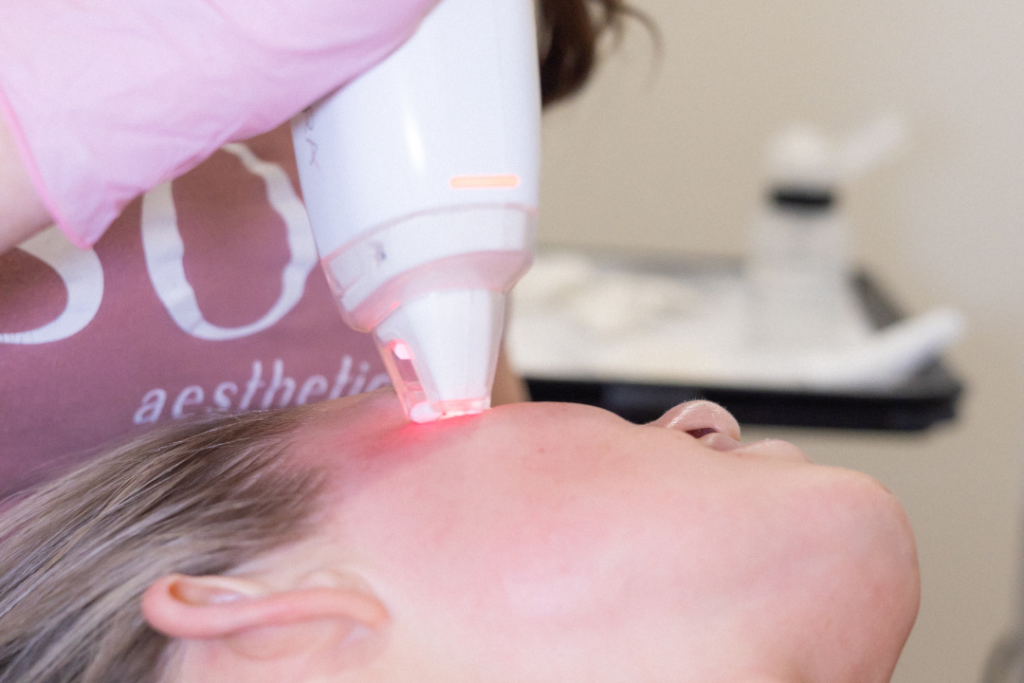
The laser handpiece is moved across the treatment area in precise passes. For non-ablative treatments like Ultra LaseMD, most patients describe a mild warming sensation. For ablative CO2 treatments, numbing is more thorough and the sensation is more noticeable but very manageable. Most treatments take 20 to 45 minutes depending on the device and areas treated.
Recovery
Recovery varies significantly based on which device and intensity level is used. UltraGlo patients may experience redness for a few hours. Full Ultra LaseMD patients typically see redness and mild flaking for one to three days. Light eCO2 treatments involve a few days of downtime, while Medium and Deep CO2 require more significant recovery with redness, swelling, and peeling for up to one to two weeks.
Sunscreen is essential following any fractional laser treatment. At Soul, we recommend mineral-based SPF like Revision Intellishade TruePhysical or SkinMedica Essential Defense Mineral Shield for post-treatment skin protection.
How Many Fractional Laser Treatments Will You Need?
This depends on the device, intensity, and your specific concerns. For non-ablative treatments like Ultra LaseMD, most patients benefit from a series of two to four treatments spaced four to six weeks apart for cumulative improvement. For ablative CO2 treatments, some patients achieve their goals in a single session, while others may choose a Light or Medium treatment repeated over time.
During your consultation at Soul, your provider will give you a personalized recommendation based on your skin and goals — never a one-size-fits-all protocol.
Combining Fractional Laser Therapy with Other Treatments
Fractional laser therapy delivers excellent results on its own — but combining it with complementary treatments often produces the most comprehensive outcome. At Soul, our signature Skin Soulutions packages are built around this philosophy:
- RadiantSkin — SkinPen Microneedling + Ultra LaseMD
- EvenSkin — Clarity II Laser + Ultra LaseMD
- TotalSkin — Genius RF Microneedling + Ultra LaseMD
These combinations treat both the surface and deeper layers of the skin simultaneously, delivering more comprehensive rejuvenation than either treatment alone. Learn more on our Skin Soulutions page.
Frequently Asked Questions About Fractional Laser Therapy in Tulsa
Is fractional laser therapy safe for all skin types?
Non-ablative fractional lasers like Ultra LaseMD are safe for all skin types and tones. Ablative CO2 lasers require more careful assessment for patients with medium to deeper skin tones — your provider at Soul will evaluate your skin and recommend the safest, most effective approach during your consultation.
How long do fractional laser therapy results last?
The collagen remodeling stimulated by fractional laser therapy creates lasting structural improvements in the skin. Results continue to improve for three to six months following treatment and can last years with proper sun protection and a consistent skincare routine. Many patients choose to return annually for a maintenance treatment.
What’s the difference between Ultra LaseMD and eCO2 at Soul?
Ultra LaseMD is a non-ablative fractional laser — it stimulates collagen without removing the skin’s surface, making it ideal for patients who want improvement with minimal downtime. eCO2 Plus is an ablative fractional CO2 laser — it resurfaces the surface while simultaneously stimulating deep collagen, delivering more dramatic results with more downtime. Your provider will help you determine which is the better fit for your concerns and lifestyle.
Can fractional laser therapy help with acne scars?
Yes — fractional laser therapy is one of the most effective treatments for acne scarring. Both non-ablative and ablative options can improve the appearance of pitted or textured acne scars, with ablative CO2 often delivering more significant improvement for deeper scarring. A series of treatments typically produces the best results.
When will I see results from fractional laser therapy?
Many patients notice an improvement in skin radiance and texture within one to two weeks of treatment. More significant improvements in tone, pigmentation, and fine lines develop over two to three months as collagen production builds and the skin renews itself.
Ready to Experience Fractional Laser Therapy in Tulsa?
If you’re ready to invest in your skin with one of the most scientifically proven, effective treatments in modern aesthetics, our team at Soul Aesthetics in Tulsa is here to help. We’ll assess your skin, explain your options, and create a plan that’s genuinely built around your goals — because that’s the Soul way.
Book your consultation today at soultulsa.com/book-now/ and take the first step toward brighter, smoother, more confident skin.
Author: Kelle C.