
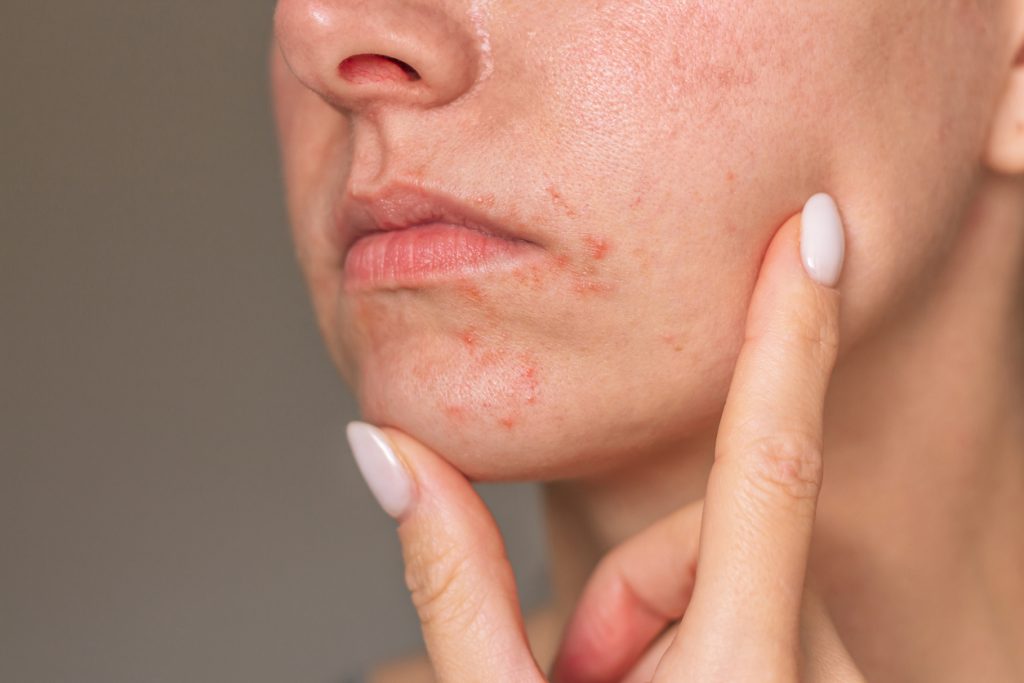
Allergic Reactions to Skincare Products: How to Spot Them and What to Do Next
Allergic reactions to skincare products are more common than most people think — and they’re not always obvious. Sometimes the reaction is immediate and unmistakable. Other times, it’s subtle: a persistent redness that won’t go away, a new sensitivity to products you’ve used for years, or a breakout that doesn’t quite look like your usual acne. Knowing the difference between a true allergic reaction, contact irritation, and a standard skin adjustment period can save you a lot of frustration — and help you get the right kind of help faster. Here’s what to watch for and how we approach sensitive skin at Soul Aesthetics in Tulsa.
Allergic Reaction vs. Irritant Contact Dermatitis: What’s the Difference?
Not every negative skin response is an allergic reaction — and the distinction matters, because the two conditions have different causes and different solutions.
Allergic contact dermatitis is a true immune response. Your immune system identifies a specific ingredient as a threat and mounts a reaction against it — even if you’ve used the product without issues many times before. This reaction can develop after months or even years of exposure, which is why people are sometimes surprised when a long-trusted product suddenly causes a problem. Common culprits include fragrances, preservatives like methylisothiazolinone, certain plant extracts, and nickel in metal packaging.
Irritant contact dermatitis is not immune-mediated — it’s a direct reaction to something that’s too harsh for your skin. Strong exfoliants, high-concentration retinoids, and products with lots of alcohol or fragrance can disrupt the skin barrier and cause redness, burning, and peeling without an allergic mechanism being involved. According to the American Academy of Dermatology, irritant contact dermatitis is actually more common than allergic contact dermatitis — but both require removing the offending product and giving the skin time to recover.
Signs of an Allergic Reaction to a Skincare Product
Allergic reactions to skincare products can look different depending on the ingredient involved and your individual immune response. Common signs include:
- Redness, swelling, or hives in the area where the product was applied
- Intense itching, burning, or stinging that starts after applying a product
- Small, fluid-filled blisters or a weeping rash
- Dry, scaly, or thickened skin (in chronic cases)
- A reaction that appears 24–72 hours after application rather than immediately
The delayed onset is one of the most confusing aspects of allergic contact dermatitis — because the reaction doesn’t always happen right away, it can be genuinely difficult to identify which product or ingredient is responsible. According to the National Institutes of Health, the sensitization phase (when the immune system first identifies the allergen) can take days to weeks, while subsequent reactions upon re-exposure typically appear within 24 to 72 hours.
Common Skincare Ingredients That Cause Reactions
While any ingredient can theoretically cause a reaction in a sensitive individual, certain ingredients appear much more frequently as culprits:
Fragrance is the single most common cause of allergic contact dermatitis from cosmetics. This includes both synthetic fragrance and natural fragrance ingredients from botanical extracts. “Fragrance-free” is not the same as “unscented” — unscented products may still contain masking fragrances that can cause reactions.
Preservatives like methylisothiazolinone (MI), methylchloroisothiazolinone (MCI), and formaldehyde-releasing preservatives are well-established allergens. They’re used in many water-based products to prevent microbial growth, but rates of sensitization have increased significantly as their use has grown.
Essential oils — including lavender, tea tree, and peppermint — are often perceived as “natural” and therefore safe, but they’re actually common sensitizers, particularly for people with reactive skin.
Certain sunscreen ingredients, particularly oxybenzone and other chemical UV filters, can cause reactions in sensitive individuals. Mineral sunscreens (zinc oxide and titanium dioxide) are generally better tolerated.
Propylene glycol, a humectant and solvent found in many moisturizers and serums, is another relatively common allergen — one that’s easy to miss because it appears in so many products.
What to Do If You Suspect a Reaction
If you think you’re having an allergic reaction to a skincare product, here’s how to approach it:
Stop using the product immediately. This sounds obvious, but people sometimes continue using a product hoping the reaction will resolve on its own. It won’t — and continued exposure can worsen and prolong the reaction.
Simplify your routine. While your skin is reacting, strip back to the basics: a gentle, fragrance-free cleanser, a simple moisturizer, and SPF during the day. The fewer ingredients you’re applying, the easier it is to identify the problem and the faster your skin can recover.
Don’t introduce new products. It’s tempting to try something that might help calm the reaction, but introducing new products while your barrier is compromised increases the risk of further reactions and makes it harder to identify the original trigger.
If the reaction is severe, spreads beyond the application area, or involves swelling of the face or throat, seek medical attention promptly. Severe allergic reactions require medical care, not skincare advice.
For persistent or recurring reactions, see a dermatologist for patch testing. Patch testing is the gold standard for identifying specific allergens and is the most reliable way to know exactly what you’re reacting to.
Building a Skincare Routine for Sensitive or Reactive Skin
If you have a history of reactions to skincare products, building a routine around clean, minimal-ingredient formulations can make a significant difference. At Soul, we carry several medical-grade lines that are well-suited for sensitive and reactive skin:
Biojuve is one of our most recommended lines for sensitive skin — it’s formulated to support the skin microbiome and strengthen the barrier without common irritants. Patients with reactive skin often find it to be one of the most tolerable and effective options they’ve tried.
Hydrinity focuses on deep hydration and barrier support, with clean formulations that prioritize skin health. It’s a great option for skin that’s been compromised by reactions, over-exfoliation, or environmental stressors.
SkinMedica offers a range of options for sensitive skin, including their TNS Advanced+ Serum and Essential Defense mineral SPF line — both formulated to be effective without unnecessary sensitizing ingredients.
If you’re not sure which products are right for your skin, a consultation at Soul is the best place to start. We can review your current routine, identify potential problem ingredients, and build a simple, effective protocol that works with your skin rather than against it. You can also browse our full skincare collection at soultulsa.com/skincare.
When Professional Treatment Can Help
Once a reaction has resolved and your skin barrier has had time to recover, professional treatments can help address any lingering redness, texture changes, or pigmentation left behind. Post-inflammatory redness and hyperpigmentation from a reaction can take weeks to months to fade on their own — but treatments like the DiamondGlow facial and Ultra LaseMD laser can accelerate that process and restore a more even, calm complexion.
If recurring reactions have left your skin chronically sensitive or reactive, a series of barrier-supporting treatments paired with the right at-home routine can help rebuild your skin’s resilience over time. Your provider at Soul will take a thorough history and assess your skin before recommending anything — we believe in understanding the full picture before jumping to treatment. You can browse our treatments by concern to see everything we offer for sensitive and reactive skin.
Frequently Asked Questions About Allergic Reactions to Skincare Products
Can you suddenly become allergic to a skincare product you’ve used for years?
Yes — this is one of the most surprising aspects of allergic contact dermatitis. Sensitization can develop after repeated exposure, meaning your immune system can suddenly identify a familiar ingredient as a threat even after months or years of tolerating it. If a product you’ve used reliably suddenly causes a reaction, an allergic response is a real possibility.
How long does it take for a skincare reaction to clear up?
Mild irritant reactions often resolve within a few days of stopping the offending product and simplifying your routine. Allergic contact dermatitis can take one to three weeks to fully clear, depending on the severity of the reaction and how quickly you remove the allergen. Persistent redness or pigmentation may linger longer and can benefit from professional treatment.
How do I figure out which product is causing my reaction?
The most reliable method is an elimination approach: stop all new products first, then slowly reintroduce one at a time with several days between each introduction. If you can’t identify the trigger this way, patch testing through a dermatologist is the definitive answer. A provider at Soul can also review your routine and flag common allergens based on your product list.
Are natural or “clean” skincare products less likely to cause reactions?
Not necessarily. Many natural ingredients — including essential oils, botanical extracts, and natural fragrances — are actually common sensitizers. “Natural” doesn’t automatically mean hypoallergenic or gentle. Some of the most problematic allergens in skincare come from plant-based sources. The best approach for reactive skin is to look for minimal-ingredient formulas that have been tested for sensitizing potential, regardless of whether they’re positioned as “natural” or “clean.”
Should I see a doctor or an aesthetician for a skincare reaction?
For a severe or spreading reaction, see a doctor first — particularly if you have swelling, hives beyond the application area, or any difficulty breathing. For a localized reaction that’s resolved or calming down, an aesthetician consultation can be a helpful next step for rebuilding your routine and identifying safer product options. If you have ongoing sensitivity or suspect a specific allergen, a dermatologist who offers patch testing is your best resource.
Take Care of Your Skin — and Get the Right Help When You Need It
Allergic reactions to skincare products are frustrating, but they’re also navigable — especially when you know what to look for and how to respond. At Soul Aesthetics in Tulsa, we take sensitive and reactive skin seriously. Whether you’re rebuilding after a reaction, looking for gentler product options, or ready to address the redness and texture changes a reaction left behind, our team is here to help.
Book your consultation at soultulsa.com/book-now/ and let’s build a skin plan that actually works for you.
Author: Kelle C.